How can Alfalah Assist?
How can Alfalah Assist?
How can Alfalah Assist?
Figure out how much you’ll need every month once you stop working, then work backward to find out how much to save today to get there.
How old you are now
The age you plan to retire
How long do you expect to live after that
What you spend monthly today
What you've already saved
How fast inflation is expected to rise
Expected rate of return used for illustration purposes
The kind of lifestyle you want after retirement
Here’s the thing most people miss: it’s not that you’ll spend more in retirement, it’s that the same lifestyle costs more every year because prices keep climbing.
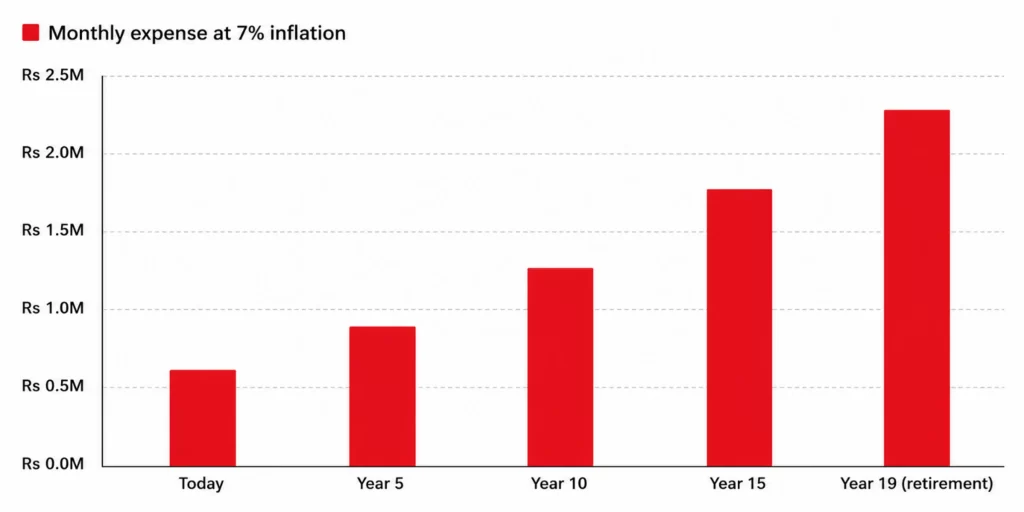
That Rs. 650,000 doesn’t grow, your lifestyle stays the same. What changes is the price tag on it. By year 19, you’d need over 3.5 times as much money just to live the way you live today. That’s why the “I’ll save enough eventually” plan usually falls short, because its aiming at today’s number, not tomorrow’s.
This is the logic a retirement calculator runs behind the scenes:
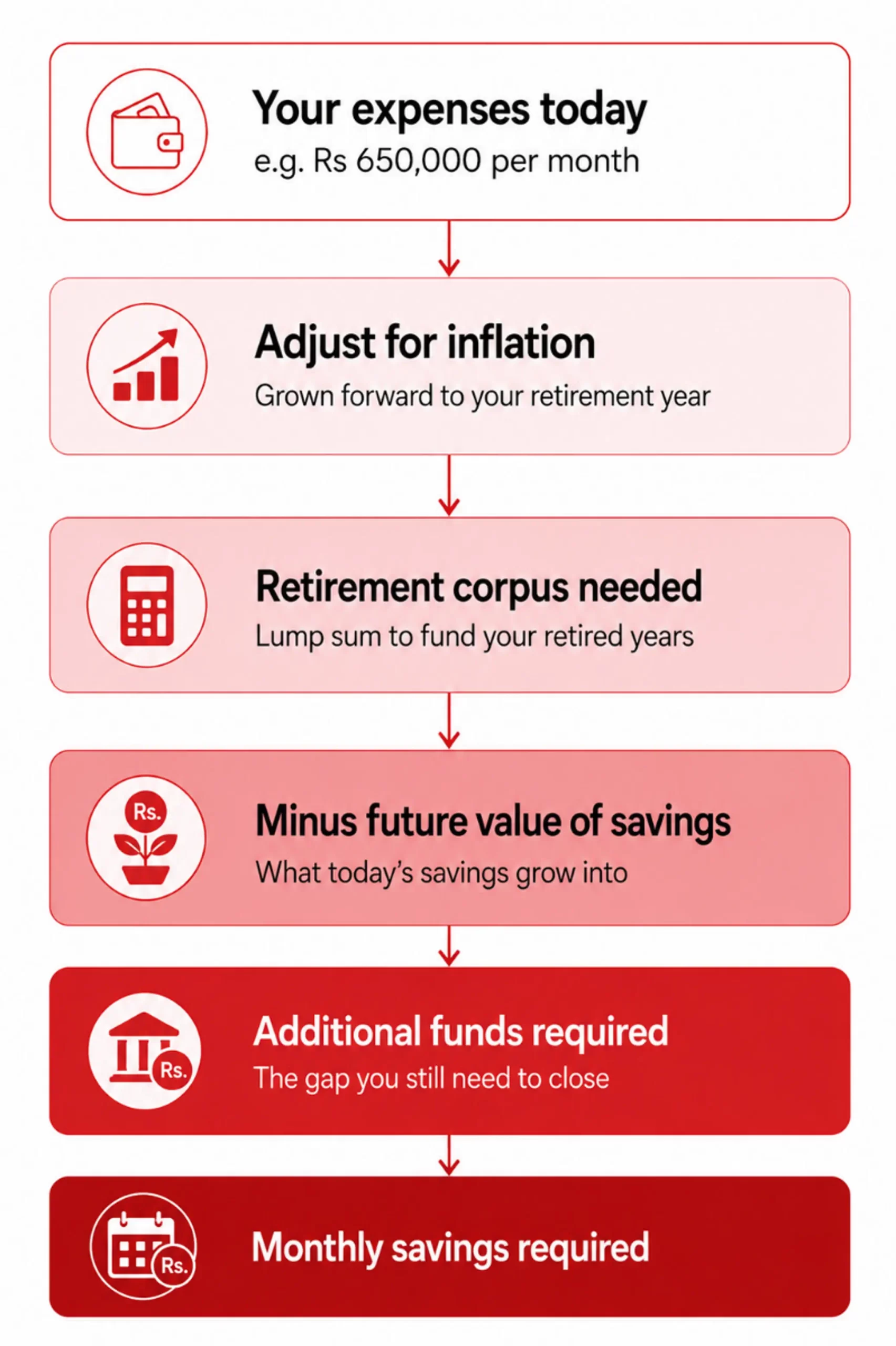
One giant pool of money that has to last your entire retired life — big enough that, combined with the return it earns, it can pay your future monthly expenses for as many years as you expect to live after retiring.
Whatever you’ve already saved doesn’t sit still if it’s invested — it keeps growing. This step estimates what that amount becomes by the time you retire, based on the return you’re earning on it.
Take your retirement corpus target, subtract what your existing savings will grow into, and you’re left with the actual gap you still need to fill.
“Start early, invest regularly, and let time work in your favor.”
The 19-year example above shows exactly why the earlier you start, the less painful the monthly number becomes, because compounding has more years to do the work for you instead of you doing it alone.
Disclaimer: The calculator estimates retirement needs in inflation-adjusted terms, helping investors understand the future purchasing power of their retirement savings rather than relying solely on nominal future values. The calculator considers both expected investment returns and inflation to estimate how much your savings may grow in real terms over time. The calculator uses assumptions provided by the investor. Actual inflation, investment returns and retirement outcomes may differ from the estimates shown.